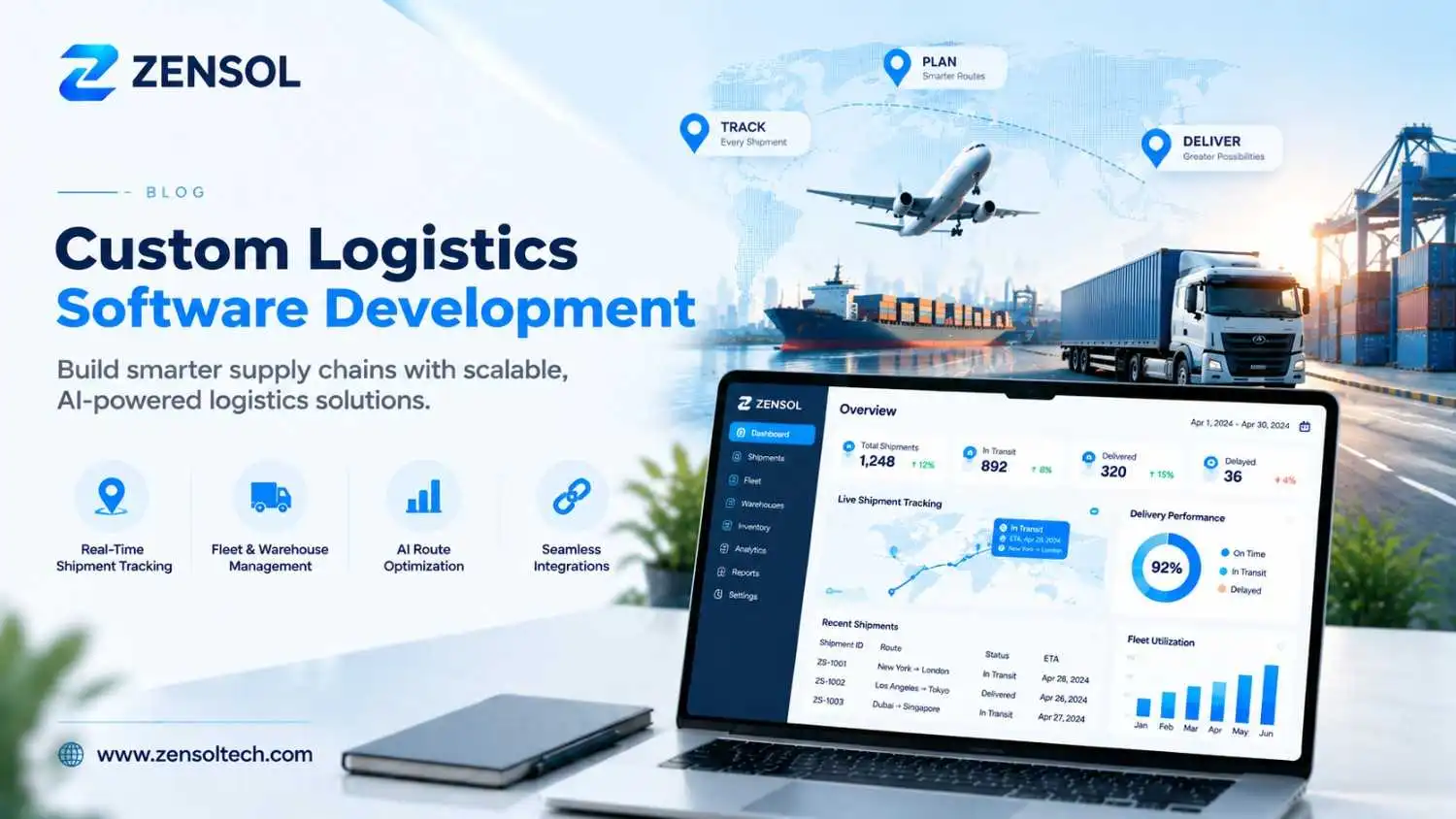
Logistics businesses need reliable systems to coordinate transportation, inventory, warehousing, and deliveries. When these operations depend on disconnected tools or manual processes, managing shipments, tracking resources, and maintaining accurate information becomes increasingly difficult.
Custom logistics software development allows companies to build digital solutions around their specific operational requirements. These solutions can connect transportation management, warehouse operations, fleet tracking, order processing, and customer communication within a centralized platform.
Unlike ready-made platforms, custom logistics software can be designed to support existing workflows, integrate with business systems, and accommodate changing operational needs. In this guide, we'll explore the essential features, software types, development process, costs, and benefits businesses should consider before investing in a custom logistics solution.
What Is Custom Logistics Software Development?
Custom logistics software development is the process of designing and building software specifically for a company's transportation, warehousing, inventory, fleet, and supply chain operations.
Rather than adapting business processes to a standard platform, companies can develop software that reflects their existing workflows and operational requirements.
For example, a freight company may need shipment booking, carrier coordination, fleet tracking, and delivery management in one system. A warehouse operator may require inventory tracking, barcode scanning, order processing, and stock reporting.
A custom solution connects the modules a business actually needs, allowing different teams to access relevant information and manage operations through a more coordinated system.
The goal is to improve operational visibility, reduce unnecessary manual work, and give businesses greater control over their logistics processes.
Why Logistics Businesses Need Custom Software
As logistics operations grow, managing transportation, inventory, warehouses, and deliveries through disconnected tools can become increasingly difficult. Businesses may face outdated information, manual coordination, limited shipment visibility, and problems managing expanding delivery networks.
Custom logistics software can address these challenges through connected workflows and centralized information.
| Business challenge | Software solution |
|---|---|
| Disconnected systems | Integrated logistics platform |
| Manual delivery coordination | Automated workflow management |
| Poor shipment visibility | GPS-enabled tracking |
| Inefficient route planning | Route optimization |
| Inventory discrepancies | Inventory management |
| Limited operational insights | Reporting dashboards |
Businesses can start with the modules they need most and expand the platform as operational requirements change.
Custom Logistics Software vs Ready-Made Logistics Platforms
Choosing between standard software and custom development depends on business requirements.
| Factor | Ready-made software | Custom logistics software |
|---|---|---|
| Customization | Uses predefined functionality | Built around specific workflows |
| Integration | Depends on supported integrations | Can be designed for required integrations |
| Scalability | Depends on vendor plans and capabilities | Can evolve with business requirements |
| Workflow management | Business adapts to available features | Software follows defined workflows |
| Ownership and control | Depends on vendor terms | Depends on development and licensing agreements |
| Initial investment | Often lower | Usually higher |
Ready-made logistics platforms can be a practical choice for businesses with standard requirements and limited customization needs. Custom development may be more suitable when companies need specialized workflows, multiple system integrations, or functionality that existing platforms cannot adequately provide.
The right choice depends on operational complexity, budget, integration requirements, and long-term business plans.
How Modern Logistics Software Works
Modern logistics software connects transportation, warehouse, inventory, and supply chain operations through a centralized digital platform. It collects real-time data, automates workflows, integrates business systems, and helps companies make faster, data-driven decisions.
User Application Layer
Web dashboards and mobile applications allow managers, dispatchers, drivers, warehouse employees, and customers to access relevant information.
Workflow Management Layer
This layer handles shipment processing, delivery assignments, inventory updates, order management, and automated notifications.
Integration Layer
APIs connect the platform with ERP systems, CRM software, GPS services, accounting tools, and carrier networks.
Data and Analytics Layer
The system collects operational information and uses reporting tools to help businesses monitor delivery performance, inventory levels, and logistics activities.
Together, these components allow information to move between departments and support more coordinated logistics operations.
Key Features of Custom Logistics Software Development
The features of a custom logistics platform depend on the company's operational model, shipment volume, and business requirements. Common capabilities include:
1. Real-Time Shipment Tracking
GPS-enabled tracking and carrier integrations help businesses monitor shipment locations, review delivery progress, and provide customers with updated status information.
2. Route Planning and Optimization
Route planning tools help dispatchers organize delivery schedules based on locations, vehicle availability, delivery priorities, and operational constraints.
3. Fleet and Driver Management
Fleet management functionality helps companies maintain vehicle records, monitor driver assignments, schedule maintenance, and review fleet utilization.
4. Warehouse Management
Warehouse functionality supports receiving, stock movement, picking, packing, and dispatch activities while improving visibility into warehouse operations.
5. Inventory Management
Inventory tools help businesses monitor stock levels, record inventory movements, and identify potential shortages or discrepancies.
6. Order and Delivery Management
These features connect incoming orders with shipment preparation, driver assignments, delivery schedules, and order status updates.
7. Reporting and Analytics
Dashboards provide information about delivery performance, fleet activity, inventory levels, and operational trends.
8. Mobile Applications
Driver and warehouse applications allow employees to access assignments, update shipment information, and record delivery activities from mobile devices. Businesses planning these applications can also explore mobile app development best practices to understand important design and functionality considerations.
9. API Integrations
Integration capabilities connect logistics software with existing business applications, carrier services, GPS platforms, and enterprise systems.
Not every logistics company needs all these features. The development scope should be based on the workflows and problems the software is intended to address.
Types of Logistics Software Solutions Businesses Can Build
Different logistics businesses require different software depending on their operational workflows, delivery models, and supply chain requirements. Custom logistics software solutions can support individual activities or connect multiple operations through a centralized platform.
Transportation Management System (TMS)
A Transportation Management System helps businesses plan shipments, coordinate carriers, manage transportation schedules, and monitor delivery progress. Custom TMS development can support specialized routing, freight workflows, and transportation reporting.
Warehouse Management System (WMS)
A WMS manages warehouse activities such as receiving, storage, inventory movement, picking, packing, and dispatch. Custom warehouse software can be designed around specific storage processes and multi-warehouse requirements.
Fleet Management Software
Fleet management systems help companies manage vehicles, driver assignments, maintenance schedules, fuel records, and vehicle utilization. Integration with GPS services can provide additional visibility into fleet operations.
Supply Chain Management Software
Supply chain platforms connect suppliers, procurement, inventory, transportation, and distribution activities. They help businesses coordinate information across different stages of their supply chain. Companies looking for specialized supply chain software solutions can explore platforms designed to support connected supply chain operations.
Last-Mile Delivery Software
Last-mile delivery solutions support delivery assignment, route planning, driver coordination, customer notifications, and proof of delivery.
Freight Management Software
Freight management software helps businesses coordinate freight bookings, carrier information, shipment documentation, transportation costs, and delivery tracking.
Order and Fulfillment Management Software
Custom fulfillment platforms connect incoming orders with inventory availability, warehouse picking, packing, dispatch, and delivery updates.
3PL Logistics Software
Third-party logistics software helps providers manage multiple clients, orders, warehouses, shipments, billing records, and customer access through a shared operational platform.
Businesses should select logistics software according to their operational requirements rather than adopting every available module. A transportation provider may prioritize TMS and fleet management, while a warehouse operator may need WMS and inventory functionality. Customizable logistics platforms can combine these capabilities when operations require a more connected solution.
Custom Logistics Software Development Process
Developing custom logistics software involves understanding business operations, selecting the right functionality, and building a platform that supports daily workflows. A typical development process includes the following stages.
Custom logistics platforms can be built around specific business workflows using the right software development services, integrations, and technical architecture.
1. Requirement Analysis
The development team evaluates existing logistics processes, operational challenges, user requirements, and business objectives to define the project scope.
2. Planning and UI/UX Design
Software architecture, system modules, user roles, and application interfaces are planned before development begins.
3. Software Development
Developers build the required web applications, mobile interfaces, backend functionality, databases, and logistics management modules.
4. Third-Party Integrations
The platform is connected with required external systems, such as GPS services, ERP platforms, carrier networks, and accounting software.
5. Testing and Quality Assurance
The software is tested for functionality, security, performance, data accuracy, and integration reliability.
6. Deployment and Maintenance
After deployment, the system is monitored, maintained, and updated as business requirements change.
The development timeline depends on project scope, required features, integrations, testing requirements, and the complexity of the logistics workflows being implemented.
How Custom Logistics Software Works in a Distribution Business
Consider a distribution company managing multiple warehouses and hundreds of daily deliveries. Its dispatch team uses spreadsheets for driver assignments, warehouse employees maintain separate stock records, and customers contact support for shipment updates.
A custom logistics platform can connect these activities through one system. When an order is received, the software can check inventory availability, coordinate warehouse preparation, and make shipment information accessible to the dispatch team.
Dispatchers can assign available drivers, monitor vehicle locations through GPS integrations, and review delivery progress. Warehouse employees can update order statuses, while customers can check shipment information through an online tracking portal.
Managers can also use reporting dashboards to review delivery performance, identify recurring delays, and monitor operational activity.
The required functionality would depend on the company's delivery model, existing systems, and business priorities.
Benefits of Custom Logistics Software Development
Custom logistics software can help businesses improve operational coordination, manage resources, and support changing logistics requirements.
- Improved Operational Efficiency: Connected workflows reduce repetitive data entry and make it easier for teams to coordinate transportation, warehouse, and inventory activities.
- Better Shipment Visibility: Centralized tracking information helps businesses monitor shipment progress and identify delivery issues more effectively.
- More Efficient Transportation Planning: Route planning and fleet management tools help dispatchers organize vehicle assignments and transportation activities.
- Improved Customer Communication: Tracking portals and automated notifications provide customers with access to shipment updates and delivery information.
- Better Business Decisions: Reporting dashboards help managers review operational performance, identify bottlenecks, and make informed decisions.
- Scalability and Flexibility: Custom platforms can be extended with additional modules, integrations, and user capabilities as business requirements evolve.
The actual benefits depend on how well the software is designed, implemented, and integrated into existing operations.
How Much Does Custom Logistics Software Development Cost?
The cost of custom logistics software development depends on the functionality, technical complexity, integrations, and platforms required for the project.
A basic shipment tracking application will generally require a different development scope from a complete logistics management platform connecting fleet operations, warehouses, inventory, and customer portals.
The main factors influencing development costs include:
- Software Features: The number and complexity of logistics modules affect development effort.
- Application Type: Web platforms, mobile applications, and enterprise systems have different requirements.
- Third-Party Integrations: GPS, ERP, CRM, carrier, and payment integrations can increase project complexity.
- User Roles and Permissions: Different access levels for managers, drivers, warehouse employees, and customers require additional functionality.
- Security and Infrastructure: Data protection, hosting, backups, and access management influence technical requirements.
- Maintenance and Support: Updates, monitoring, bug fixes, and future improvements should be considered in the overall budget.
Before estimating a project, businesses should define their essential features, existing system requirements, expected user volume, and integration needs.
A detailed project scope helps development teams provide a more realistic cost estimate and avoid unnecessary functionality in the initial release.
Note: Actual development costs vary according to project scope, team location, technology requirements, and implementation complexity. Businesses should request a project-specific estimate rather than rely on generic pricing ranges.
AI Applications in Modern Logistics Software
Artificial intelligence can help logistics businesses analyze operational data, identify patterns, and support more informed planning decisions. Its usefulness depends on available data, system integrations, and business requirements.
Logistics businesses can incorporate AI-powered capabilities into their platforms through AI integration with existing software, helping connect intelligent features with established workflows.
- Predictive Analytics: Analyzes historical and current operational data to identify possible delivery delays, demand changes, and performance trends.
- Route Optimization: Evaluates factors such as traffic, delivery priorities, vehicle capacity, and route constraints to recommend suitable delivery routes.
- Demand Forecasting: Helps businesses estimate future inventory requirements using historical demand patterns and available sales data.
- Predictive Maintenance: Analyzes vehicle performance information to identify potential maintenance requirements before equipment failures occur.
- Inventory Planning: Helps businesses review stock movement and demand patterns when planning inventory levels.
AI capabilities should be selected according to practical business needs. Many logistics platforms can begin with conventional automation and introduce AI-powered functionality when sufficient data and a clear use case are available.
How to Choose the Right Logistics Software Development Company
Choosing a logistics software development company requires evaluating its technical capabilities, understanding of logistics workflows, and ability to support the software after launch.
Consider:
Industry Experience
A company should understand logistics operations, workflows, and challenges.
Technical Expertise
Evaluate experience with:
- Cloud technologies
- APIs
- Mobile applications
- AI solutions
- Enterprise integrations
Portfolio
Previous projects demonstrate practical experience and development quality.
Security Practices
The company should follow strong security standards to protect operational data.
Long-Term Support
A reliable partner should provide maintenance and future improvements.
Why Choose Zensol Technologies for Logistics Software Development?
Zensol Technologies helps businesses develop custom software solutions tailored to their logistics and operational requirements. From transportation management and warehouse applications to shipment tracking and system integrations, the focus is on building practical, scalable solutions.
Looking to streamline your logistics operations? Contact ZensolTech to discuss your software development requirements.
Final Thoughts
Custom logistics software development gives businesses the flexibility to build systems around their transportation, warehousing, inventory, and delivery requirements.
From TMS and WMS platforms to fleet management, shipment tracking, and fulfillment applications, the right solution depends on how a business operates and which processes it needs to improve.
Before starting development, companies should identify their operational challenges, prioritize essential features, review integration requirements, and establish a realistic project budget.
With the right planning and development partner, businesses can create logistics software that supports better coordination, operational visibility, and long-term growth.